How to raise salon prices without losing clients
In short
- A 10% price rise pays off even if almost one client in ten leaves: materials per visit don’t get dearer, so the whole increase is yours.
- It’s time to raise prices when the diary is full ahead, the best hours run out and your costs have gone up.
- Start with the busiest services and specialists, not the whole price list at once.
- Give notice, keep the old price for people already booked, and don’t apologise.
Prices that haven’t changed in two years almost always mean the salon earns less than it did: materials, rent and everything else got more expensive. But raising them is scary — it feels like regulars will leave. First work out how many would have to leave for the rise to lose you money. Usually more than you think.
How many clients can you lose when you raise prices
When you raise a price, materials per visit cost the same. So the whole increase stays with you, and to lose money more clients have to leave than the percentage of the rise. Put in your own numbers:
Break-even loss when you raise prices
Calculated on margin: materials per visit don’t get dearer when you raise the price. Numbers are not sent anywhere.
The formula is simple: if the price rises by a share r and materials take a share m of the ticket, you can lose r ÷ (1 + r − m) of visits without losing income. With a 10% rise and 15% materials that’s about 10.5% of visits.
There’s a second gain the calculator doesn’t see: lost visits free up the specialist’s time. You can sell it to new clients — at the new price.
When it’s time to raise prices
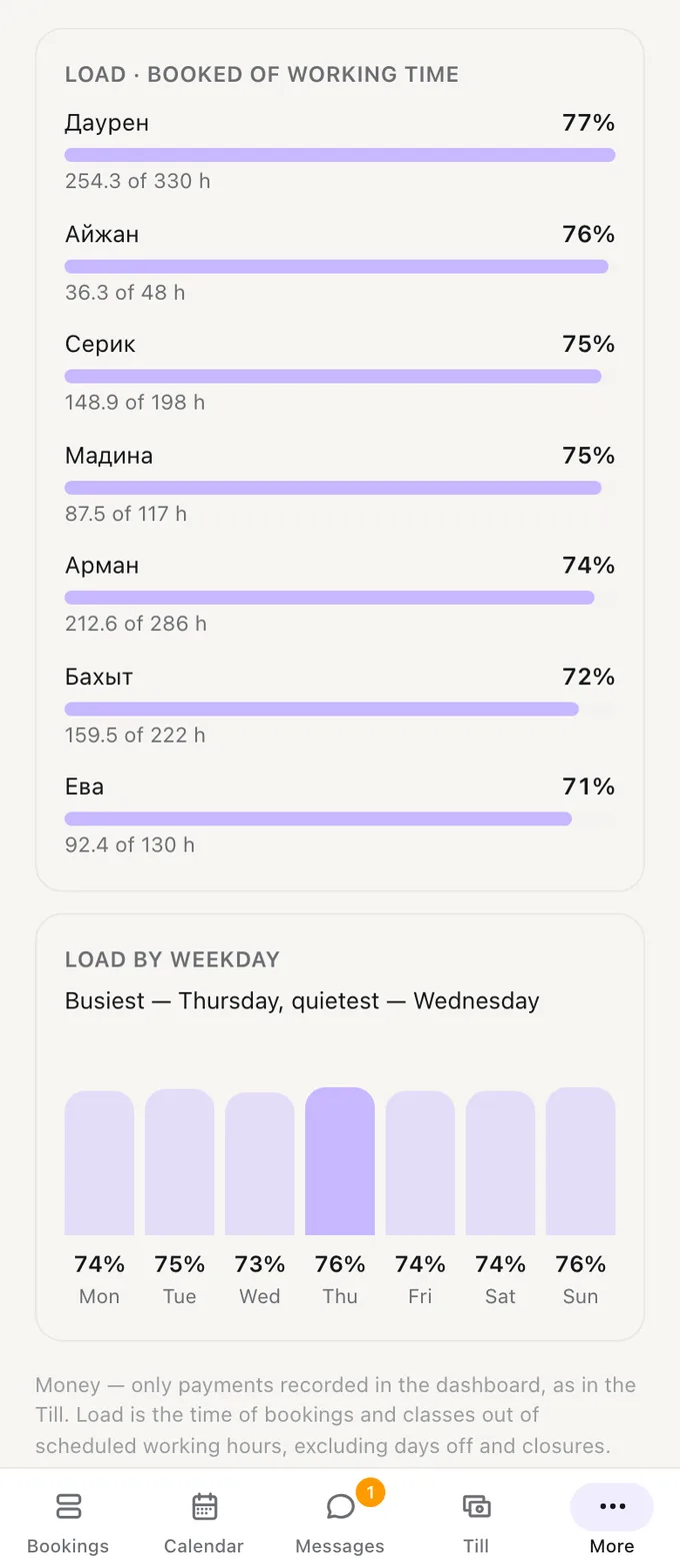
- The specialist’s diary is full a week ahead, and you turn people away at popular hours.
- Materials or rent went up, but the price stayed the same.
- The specialist has trained and does more than before.
- Prices haven’t changed for over a year.
- New clients book without asking about price — you may be cheaper than people expect.
Which services to start with
| Situation | How to raise |
|---|---|
| The specialist is fully booked with regulars | Their key services; leave the rest unchanged |
| Materials got more expensive | Services where materials are a large part of the price |
| The specialist has grown in skill | Introduce levels: a senior specialist costs more |
| Prices haven’t changed for a long time | The whole price list, with a date announced in advance |
Clients take a small rise once a year more calmly than a sharp one every three years. Go by your own costs and workload, not the neighbours’: your rent, materials and specialists are different.
How to tell clients about a price rise
Briefly and in advance. A price rise needs no excuses — a date and the new price are enough.
Example: “From 1 December a gel manicure costs 9,000 ₸. Everyone booked before that date comes at the old price. Thank you for being with us!”
- Give two to four weeks’ notice — on social media, at reception and personally to regulars.
- Keep the old price for people already booked: it’s fair and removes most of the grumbling.
- Don’t apologise or write long explanations: clients know everything has got more expensive.
- Update prices everywhere at once: the price list, Instagram, 2GIS.
What doesn’t work
- A silent rise. The client finds out the new price at the till and feels cheated — worse than the rise itself.
- A rise with a cut. If you shorten the treatment or switch to cheaper materials along with the price, your best clients are the ones who leave.
- Discounts right after the rise. They devalue the new price and teach people to wait for promotions.
- “Prices in DM”. Hidden prices don’t prevent comparison — they put off people who are ready to pay.
Frequently asked questions
How often can I raise prices?
The rhythm clients are used to is no more than once a year, a little at a time. A sharp rise after several years without change is harder to take, even if the total is the same.
Should I tell regular clients personally?
Those who come regularly — yes, at least with a short message. Someone who knows about the new price in advance takes it as a rule, not a surprise.
What if I have fewer clients after the rise?
Judge after two or three months, not a week: some clients simply move their visits. Compare revenue and load with the period before the rise — if revenue didn’t fall and time was freed up, the rise worked.
Can I raise prices only for new clients?
For a while: keep the old price for regulars for a month or two. Running two price lists for long is hard — for reception and for relationships with clients who will compare one day.
All of this is already in Naya
Online booking, client reminders, client cards and a till — in one dashboard for a salon or a specialist.